





I’ll clock in for you: what does buddy punching really cost your company?

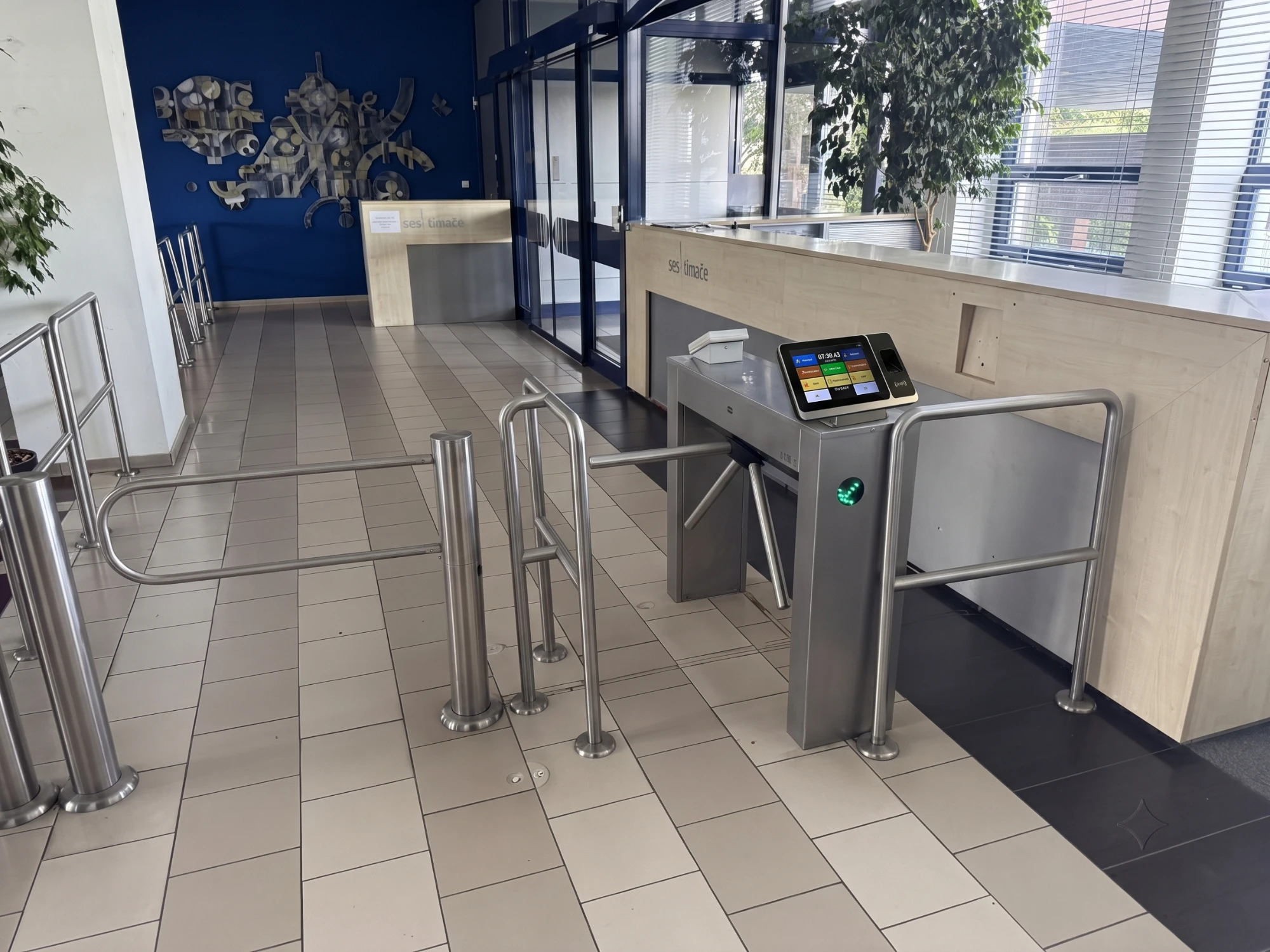

“Give me a beep, I’ll be there in ten minutes.” Someone on the early shift receives a message like this almost every week. At the turnstile, they tap both their own card and a second one; the terminal records their arrival and everyone’s happy. Well, everyone except the company, which ends up paying for those minutes.
A friendly service paid for by the company
Clocking in for a colleague, known abroad as ‘buddy punching’, takes many forms. Someone is running late and asks a colleague who is already at work to clock in for them. Others leave early and leave their card with a colleague from a later shift. In some workplaces, the chips for the whole shift are hung on a single hook by the entrance; elsewhere, a list of PIN codes is stuck directly onto the side of the terminal.
Nobody involved feels they are doing anything wrong. It is a small favour between colleagues, which is precisely why it is not discussed openly. Managers often suspect as much, but without evidence they are unwilling to take action.
How much does it actually cost?
A few minutes a day doesn’t sound like much of a problem. But let’s work it out for a model company with 100 employees working in shifts.
Let’s say five people regularly cover for each other like this, and each one gains an average of 15 minutes a day. The total cost of labour, including the employer’s contributions, is €12 per hour.
Five people times 15 minutes equals 75 minutes a day. That’s €15 a day and, over 250 working days, €3,750 a year. For time that nobody actually worked.
Assuming the same proportions (5 per cent of staff, 15 minutes a day, €12 per hour), the annual loss by company size looks like this:
- 50 employees: €1,875 per year
- 100 employees: €3,750 per year
- 300 employees: €11,250 per year
- 500 employees: €18,750 per year
And we’ve been conservative. The calculation does not include overtime pay, which arises automatically from ‘late departures’, nor the hours managers spend correcting and checking attendance records.
Approximately €37.50 per year per employee. For one person, this may seem like a small amount. But for the whole company, it certainly isn’t.
It’s not just about money
Imagine a fire alarm. The evacuation is based on a list of people who, according to the system, are in the building. If the list includes someone whom a colleague ‘checked in’ that morning, but who is actually still sitting in their car, the fire brigade may end up searching for a person who was never in the building in the first place.
The second point concerns the law. An employer must keep records of working hours (Section 99 of the Labour Code) and, during an inspection, the labour inspectorate expects these records to correspond to reality.
And then there’s the atmosphere within the team. People who arrive on time notice that someone is bending the rules and nothing happens. This demotivates them more than a few stolen minutes.
The card verifies the card, not the person
A chip, a card and a PIN code all confirm one thing: a valid identifier was used at the terminal. Who was holding it at the time, however, remains unknown. A card can be lent out; a PIN can be shared.
Some companies deal with this by installing a camera above the terminal or carrying out random checks at the entrance. It works, but someone has to review and compare the recordings. And employees tend to feel more under suspicion than protected as a result.
Finger, face or palm
No one can slip a biometric identifier into their pocket. The terminal does not verify the card, but the person directly, so ‘swiping in’ for a colleague essentially comes to an end the day you set it up.
Which sensor to choose depends mainly on the environment. Fingerprint recognition is a tried-and-tested and affordable option for offices or reception areas. In manufacturing or on construction sites, where people wear gloves or have dirty hands, facial recognition works better as it is contactless. Palm recognition is also contactless and is not affected by glasses, helmets or face masks.
For people at the entrance, nothing changes for the worse, quite the opposite, in fact. They simply scan their finger or look into the camera and carry on. They don’t have to rummage through their jacket for a card or remember a code.
Under the GDPR, biometric data falls within the special categories of personal data, so its implementation must be carefully prepared. You should carry out a Data Protection Impact Assessment (DPIA), inform staff in advance, and provide an alternative option, such as a card, for those who refuse to use biometrics. The system should only store a mathematical template, not a photograph of a finger or face. Check the details with the person in charge.
How to implement this without upsetting people
The biggest mistake is to announce a change by email along the lines of ‘biometric authentication from Monday’. People interpret this as ‘we don’t trust you’, and resistance ensues.
It’s better to explain what it’s all about: fairness towards those who arrive on time, and safety during evacuations. Try out the terminal at one entrance or during one shift first, and listen to what people’s concerns are. Make sure all the GDPR paperwork is sorted before you mount the scanner on the wall. And after a few months, compare overtime and late arrivals with the period before the change. The difference will show you exactly how much it was costing you to ‘cover’ for a colleague up until then.
webVisitor
How webBox handles this
The webVisitor attendance system has its own biometric scanners for facial recognition, fingerprints and palm prints. You can therefore install the sensor best suited to each workplace: facial recognition in production, fingerprint in the office, and palm recognition where people wear helmets or face masks. Those who do not wish to use biometrics can clock in using a card, a QR code or a mobile app. The data is then sent directly to the payroll records, without the need for manual transcription.
You can find both scanners and terminals in the hardware overview.
Did this article catch your interest?
We'll walk through your processes and show you how it would work in your company.